Sunday, February 12, 2012

Just Lin, Baby! 10 Lessons Jeremy Lin Can Teach Us Before We Go To Work Monday Morning - Forbes

Just Lin, Baby! 10 Lessons Jeremy Lin Can Teach Us Before We Go To Work Monday Morning

10901
 
2034
 
35
 
30
 
NEW YORK, NY - JANUARY 31:  Jeremy Lin #17 of ...

Image by Getty Images via @daylife

Lin-sanity has swept up the NBA over the last week.  Now it seems like the phenomenon has gone worldwide.

Friday's 38 point performance by Harvard grad Jeremy Lin for the New York Knicks against the LA Lakers was his greatest performance yet as a starter, since he burst on to the scene and propelled the team to 4 straight wins.

Lin now has over 200,000 followers on Twitter.  He's got over 800,000 on Weibo – including 200,000 new ones in the 24 hour period after beating the Lakers.

But there's more to this story than basketball.  This isn't just a modern-day, real-life version of the Hoosiers movie.  The Jeremy Lin story is incredibly popular because we can all see a little bit of ourselves in this man's struggles and now successes.

What can all of us learn from this young man — and how can we apply these same lessons to our own lives when we go back to work on Monday morning?

1. Believe in yourself when no one else does. Lin's only the 3rd graduate from Harvard to make it to the NBA.  He's also one of only a handful of Asian-Americans to make it. He was sent by the Knicks to play for their D-League team 3 weeks ago in Erie, PA.  He'd already been cut by two other NBA teams before joining the Knicks this year.  You've got to believe in yourself, even when no one else does.

2. Seize the opportunity when it comes up. Lin got to start for the Knicks because they had to start him.  They had too many injuries.  Baron Davis was gone.  The other point guards were out.  Carmelo Anthony was injured.  Amare Stoudemire had to leave the team because of a family death.  Lin could have squandered the opportunity and we would have never have noticed.  But he made the most of it.  You never know when opportunities are going to arise in life.  Often, they're when you least expect them.  Make the most of them. Don't fritter them away.

3. Your family will always be there for you, so be there for them. It wasn't until a few days ago that Lin got his contract guaranteed by the Knicks for the rest of the season.  Before that, he could have been cut at any time.  He had to sleep on his brother's couch on the Lower East Side to get by.  His family always believed in him and picked him up when he could have gotten down on himself.  That made him continue to believe.  If you want your family to believe in you like that, you've got to be there for them too when they need it.

4. Find the system that works for your style. Lin isn't Michael Jordan or Kobe Bryant.  He's not a pure scorer.  He's a passer and distributor – who can also score very well.  It didn't work for him in Golden State or Houston – where he was before landing at the Knicks.  But Mike D'Antoni's system at the Knicks has been perfect for him to show off his strengths.  You've got to do your best to understand what your strengths are and then ensure that you're in a system (a job or organization or industry) that is a good fit for those strengths.  Otherwise, people overlook the talents you bring to the table.

5. Don't overlook talent that might exist around you today on your team. You probably manage people at your own company today.  Are you sure you don't have a Jeremy Lin living among you now?  How do you know that "Mike" couldn't do amazing things if you gave him a new project to run with?  How do you know "Sarah" isn't the right person to take the open job in London that you've been talking over with your colleagues?  We put people around us in boxes.  He's from Harvard.  He's Asian-American.  Not sure he can play.  How many assumptions have you made about talent around you?  Don't be like the General Managers in Golden State and Houston, and let talent slip through your fingers.  With all their money, scouts, and testing, they didn't have a clue what they had in their hands.  Do you know what your people (or even yourself) is really capable of?  Take off the blinders of assumptions you wear when you look at the world.

6. People will love you for being an original, not trying to be someone else. You've got to be you.  You can't be some 2nd rate copy of Michael Jordan.  There will never be another Michael Jordan.  Just be Jeremy Lin — yourself.  Whatever that is.  That doesn't mean you don't work hard — it just means you find what you're good at and do it.  Fans will love you for being you, just like they love Jeremy Lin.  Judy Garland said it best:

"Always be a first-rate version of yourself, instead of a second-rate version of somebody else."

7. Stay humble. If you one day are lucky enough to have newspapers want to put you on the cover in order to sell more, don't let it get to your head.  It's been remarkable watching how humble Lin remains through all this media frenzy.  It makes his teammates and fans love him that much more.

8. When you make others around you look good, they will love you forever. I didn't know how good Tyson Chandler was, until I saw him playing with Jeremy Lin.  Lin has set Chandler up many times over the last week for easy dunks because he drew the defense and then passed the ball.  That's partly why the Knicks are playing so well.  They are all working harder to share the ball with others.  And it's beautiful to watch.  And when the media swarms Lin, he tells them how good his teammates are.  Do the same with your peers and reports.

9. Never forget about the importance of luck or fate in life. Some people believe in God, some in destiny, some in luck.  Whatever you believe in, be grateful for it.

10. Work your butt off. Lin couldn't have seized his opportunity if he hadn't worked like crazy for years perfecting his skills.  There are no short cuts to hard work.  Success is a by product of that.  If you've got a Tiger Mom who's always pushed you to work hard, great.  If not, let your conscience be your own Tiger Mom!  Get up early, stay up late.  Nobody gave Lin any free passes. Why should you get any?  You can only control what you control and that means you've got to work harder than anyone else you know.

I hope the Lin-sanity continues.  And I hope we all can apply these lessons to our own work and family life.

There's a great line from a New York Times article on Lin and his faith which is worth it for all of us to remember:

"suffering produces character, and character produces hope, and hope does not disappoint us."


Friday, February 10, 2012

7 Fundamental Meditations on Faith | Brain Pickings

7 Fundamental Meditations on Faith | Brain Pickings

7 Fundamental Meditations on Faith

by

What the magician Penn Gillette has to do with a ring of earth 700 miles north of the equator.

Belief lies behind the best and worst of human history. Faith in something larger than the self — or lack thereof — has shaped our societies for millennia, so we thought it about time to take a survey of the topic. (Perhaps you agree, since the BBC4 documentary The End of God?: A Horizon Guide to Science and Religion is one of Brain Pickings‘ most popular posts of all time.) Given the rich and faceted nature of the subject, it’s practically impossible to produce a list that is exhaustive, conclusive and universal, but we’ve narrowed it down to six absorbing and provocative books, plus one documentary, about the human quest for existential meaning.

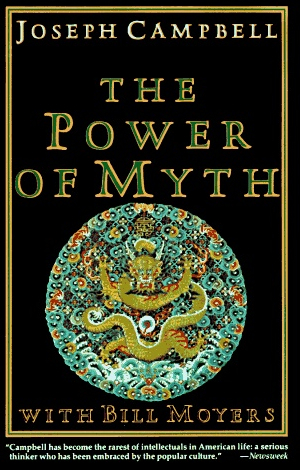
THE POWER OF MYTH

The Power of Myth is considered a classic of the faith canon, and for good reason. In a 1988 six-part PBS series of the same name, host Bill Moyers and folklore and mythology expert Joseph Campbellplace belief within the perspective of human history. The Q&A format makes for a fun read, and allows Campbell to weave a comprehensive picture of faith across cultures and from prehistory to the present moment.

From ritual sacrifice to the symbolism of Star Wars, the transcript of Moyers and Campbell’s sessions articulates fundamentals of our value systems so widely accepted as to be taken for granted.

The source of life — what is it? No one knows. We don’t even know what an atom is, whether it is a wave or a particle — it is both. We don’t have any idea of what these things are. That’s the reason we speak of the divine. There’s a transcendent energy source. When the physicist observes subatomic particles, he’s seeing a trace on the screen. These traces come and go, come and go, and we come and go, and all of life comes and goes. That energy is the informing energy of all things. Mythic worship is addressed to that.” ~ Joseph Campbell

Like a fascinating post-dinner conversation with your fabulously erudite uncle,The Power of Myth is a great survey of the spiritual stories humans have held to be self-evident throughout time.

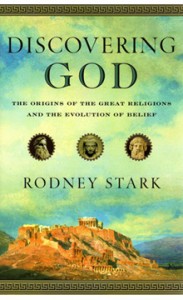
DISCOVERING GOD

Author Rodney Stark set himself an ambitious agenda in Discovering God: The Origins of the Great Religions and the Evolution of Belief. From primal belief during the Stone Age, through the so-called “Axial Age” of the Buddha, Confucius, Plato, and Zoroaster, to modern Christian missionaries and the rise of Islam, Discovering God surveys every major form faith has taken in the last 2.5 million years. Even more remarkably, Stark does so in under 400 pages, including maps of various religions’ births and images illustrating how belief was reified by culture. Ultimately, the book even pushes beyond an anthropological, historical, and sociological study into whether there is, in fact, a there there.

Thus we reach the fundamental question: Does God exist? That is, have we discovered God? Or have we invented him? Are there so many similarities among the great religions because God is really the product of universal wish fulfillment? Did humans everywhere create supernatural beings out of their need for comfort in the face of existential tragedy and to find purpose and significance in life? Or have people in many places, to a greater and lesser degree, actually gained glimpses of God?”

Leaving no stone unturned in its quest to draw a map of mankind’s belief,Discovering God will satisfy those looking for deep background on pre- and post-modern ideology, and everything in between.

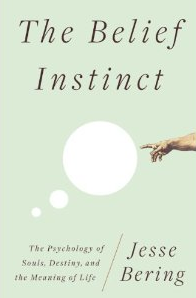
THE BELIEF INSTINCT

Evolutionary psychologist Jesse Bering takes a very different tack with The Belief Instinct: The Psychology of Souls, Destiny, and the Meaning of Life, posing the salient question:

If humans are really natural rather than supernatural beings, what accounts for our beliefs about souls, immortality, a moral ‘eye in the sky’ that judges us, and so forth?”

Referencing the latest in cultural studies, neuroscience, and psychology, this highly engaging exploration of faith touches on the concept of an afterlife, whether animals too have existential needs, and how the movie Being John Malkovich plays on a philosophical puzzle most succinctly formulated by Descartes. Read our full review from earlier this yearhere.

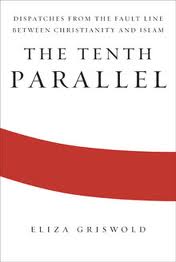
THE TENTH PARALLEL

The Tenth Parallel: Dispatches from the Fault Line Between Christianity and Islam takes you on a riveting tour across the real-life middle earth, with gorgeous language as a guide. Its author, award-winning investigative journalist and poet Eliza Griswold, spent the last seven years traveling along the eponymous tenth parallel — the latitude line 700 miles north of the equator — where more than 60 percent of the world’s 2 billion Christians and half the world’s 1.3 billion Muslims reside. The Tenth Parallelunfolds across the enormous canvases of Africa and Asia, in deserts and megacities, and shows how completely theology, culture and politics intersect. Griswold places faith into geographical context, or perhaps the other way around — her discovery being how much land influences what we think about how to live.

We pulled into the pastor’s village after true dark — the absolute profundity that occurs only when no city lights bruise the sky plum. He was waiting on the riverbank outside his small house, its windows edged in lace doilies. Heavy-headed marigolds bobed in the gelid breeze the river made. The churning water seemed phosphorescent; the pastor’s white eyebrows and hair seemed to glow against the darkness.”

If you want to understand the present and future of global geopolitics but prefer to read breathtaking prose over AP-style wire reports, The Tenth Parallel won’t disappoint.

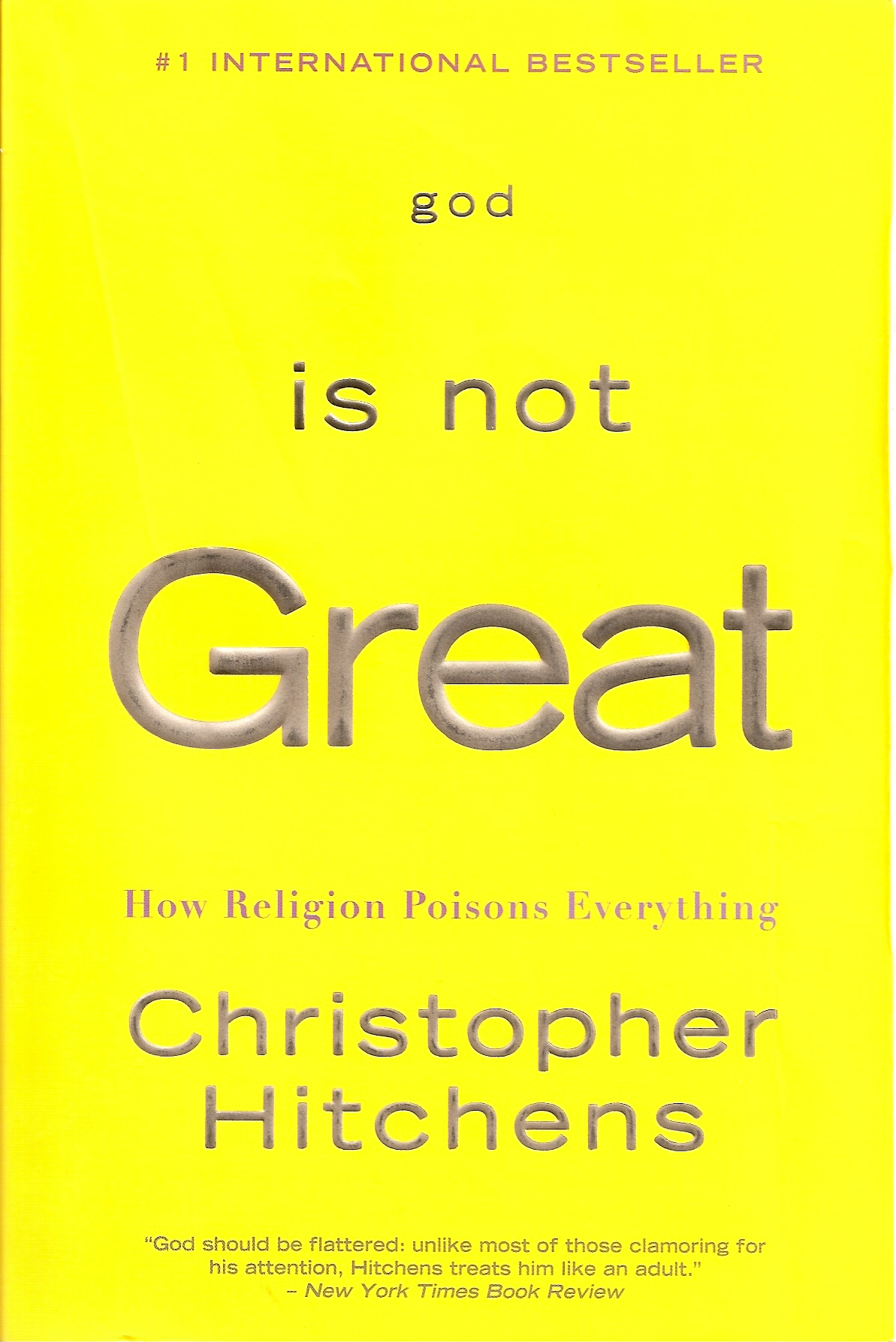
GOD IS NOT GREAT

Tailored to those who prefer pugilism to poetry, God Is Not Great: How Religion Poisons Everything by famously devout atheistChristopher Hitchens excoriates every organized religion while also putting a range of historical figures, from Thomas Aquinas to Zen Buddhists, in their place. As an alternative, God Is Not Great proposes a “new enlightenment” with knowledge, reason and science at the center of human pursuits.

Not all can be agreed on matters of aesthetics, but we secular humanists and atheists and agnostics do not wish to deprive humanity of its wonders or consolations. Not in the least. If you will devote a little time to studying the staggering photographs taken by the Hubble telescope, you will be scrutinizing things that are far more awesome and mysterious and beautiful — and more chaotic and overwhelming and forbidding — than any creation or ‘end of days’ story.”

Written in the wake of the 9/11 attacks and with Hitchens’s signature passion and rigor, God Is Not Great makes a clear case for what’s wrong with keeping the faith, historically and today.

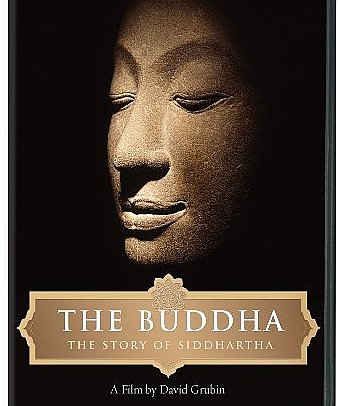
THE BUDDHA

We were thrilled to find that the 2010 documentary The Buddha: The Story of Siddhartha can now be viewed in its entirety for free online. Narrated by celebrity BuddhistRichard Gere, The Buddha is a biography of Siddharta Gautama, the Indian sage whom the stories say gained Enlightenment more than 500 years before Christ’s birth.

The chronological tale of his life takes us on a visually stunning journey matching Gautama’s travels, from his birthplace in present-day Nepal across the Gangetic Plain and back. Featuring interviews with The Dalai Lama, poet W.S. Merwin, and Uma Thurman’s father and Columbia professor Robert Tenzin Thurman, The Buddhaboth entertains and enlightens.

Illustrated by beautiful animations,The Buddha is a meditative and thought-provoking tour through one remarkable man’s life.

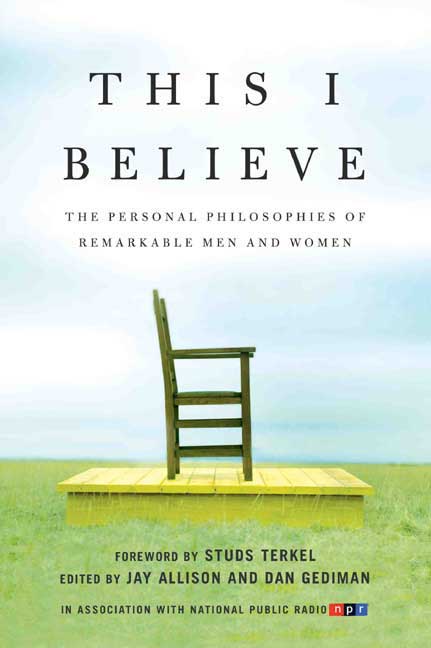
THIS I BELIEVE

Eighty essays comprise the bookThis I Believe: The Personal Philosophies of Remarkable Men and Women, based on an NPR series of the same name. The anthology spans nearly 60 years and contains incredibly intimate observations from famous figures including Albert Einstein (♥ ♥),Temple Grandin (♥), Martha Graham, andHelen Keller. We get the personal reflections ofKay Redfield Jameson: “intense experience and suffering instruct us in ways less intense emotions can never do;” and the searching doubt of Eleanor Roosevelt: “I don’t know whether I believe in a future life. I believe that all that you go through here must have some value; therefore, there must be some reason.”

A rare opportunity to glimpse the innermost thoughts of prominent people, This I Believe constantly reminds the reader of the vast range of belief which inspires our every action.

We must learn to know ourselves better through art. We must rely more on the unconscious, inspirational side of man. We must not enslave ourselves to dogma. We must believe in the attainability of food. We must believe, without fear, in people.” ~ Leonard Bernstein

And if you enjoy the many ideas on display in This I Believe, there’s also a second volume of 75 more essays.

As society grows increasingly interdependent, understanding each other’s existential positions has never been more important. Whatever your own spiritual orientation, we hope the selections here provide insight into the plurality of faith and provoke deeper thought into your own beliefs.

Kirstin Butler is writing an adaptation of Gogol for the Google era called Dead SULs, but when not working spends far, far too much time on Twitter. She currently lives in Cambridge, MA.

Career wisdom in just 6 words - Fortune Management

Career wisdom in just 6 words - Fortune Management

You wouldn't think six words could say much, but entries in a recent contest carry bite-sized chunks of insight.

By Anne Fisher, contributor

If someone asked you to sum up in six words what you've learned so far about how to succeed in business, what would you say? When Smith magazine and consulting firm Mercer posed the question last year, they got thousands of entries, which they winnowed down to 400 for a book calledSix Words About Work. A sampling of the winners:

  • "Always start with assuming good intentions." — Teri Edman
  • "Don't hire geniuses, hire capable people." — Larry Bradley
  • "Persistence has more value than qualifications." — Mitch Polack
  • "Work like you own the company." — John Thornton
  • "Need the facts? Ask a secretary!" — Jim Berman
  • "Know security guards, cleaners by name." — Wesley Coll
  • "You're not learning if you're comfortable." — Debbie Beets
  • "Do one more thing than requested." — Gary Belsky
  • "Screw-ups will happen. Just own them." — Kara Carthel
  • "Cutting corners only creates more paperwork." — Dyan Titchnell
  • "Walk the hall rather than call." — Juliette Mirsepasy
  • "Add value — otherwise you're a commodity." — Randall Lane
  • "If you don't know, say so." — B. Saville
  • "Get the hardest part done first." — Cathy Smith
  • "Pretend impossibilities are possible. They are." — Sandi Hemmerlein
  • "Fail fast. Learn fast. Improve fast." — Steven Robins
  • "Avoid all paintball team-building games." — Mary Gordon
  • "Go outside the building to scream." — Carol Wilson
  • "Surprise your spouse, not your boss." — Laureatte Loy
  • "Don't laugh while boss is ranting." — Leslie Wolf Branscomb

And speaking of bosses, how about a 42-word crash course in how to be a great one? Consider these descriptions of "the best boss I ever had."

  • "Took responsibilities very seriously, not himself." — Anita Sanders
  • "Two ears, one mouth, engaged wisely." — Bob Myers
  • "Asked for ideas, and used them." — Deborah A. Cunefare
  • "Provided guidance, didn't take the credit." — Peter Ashkenaz
  • "Shouted 'Get out now!' at 6 p.m." — Atsuko Dudash
  • "Promoted truth, justice and, eventually, me." — George Sosa

Maybe you've never worked for a boss who inspired you to echo Dana Shaw's encomium -- "Shame he couldn't have superhero's cape." But here's hoping your underlings never echo six words from contestant Lacy Foland: "Wait. People have good bosses? Unfair."

Dilbert and The Smart Talk Trap: The Dangers of Skilled Bullshitting - Bob Sutton

Dilbert and The Smart Talk Trap: The Dangers of Skilled Bullshitting - Bob Sutton

Dilbert and The Smart Talk Trap: The Dangers of Skilled Bullshitting

44411.strip
One of the main themes on The Knowing-Doing Gap is something that we call "The Smart Talk Trap," that there are too many times in organizations when executives, managers, and other people say smart things instead of doing smart things, and somehow after they have said all the right things, they feel so much better that they believe no other action is necessary or somehow their magical words will turn into action without having to do anything else. Another variation is when bosses do seemingly brilliant talk, talk that they believe is brilliant too, and then -- because they don't know what they are talking about -- people either resist turning it into action or, when they try, it turns out to be impossible (I recall a stage gate system at one of my client's organizations that was impossible to use.) Indeed, bad ideas of this last variety helped inspire Jeff Pfeffer and I to write Hard Factsbecause we kept dealing with organizations where people believed that they were doing the right thing, but we believed it was wrong based on the best evidence-- they suffered from doing-knowing gaps, as we came to call them.

The above cartoon is intriguing because it seems to reflect a case of skilled bullshitting leading to dumb action -- and the bullshitter knows it is dumb. Dilbert thought it he was talking about garbage, he just threw together a presentation to get through a meeting. Unlike many bosses and others who do this,however, Dilbert realizes his ideas are garbage -- but now it seems they are being acted upon! The only other thing I've ever heard like this in real corporate life happened with a talking Barney doll at Microsoft. Here is the story from Weird Ideas That Work -- note that like Dilbert, it was an idea that the team believed was bad from the start, yet somehow it was turned into action. The extra twist was whether or not the product sucked, it was a commercial success. This story was told to me in 2000 by Justin Kitch, CEO and founder of Homestead, a dotcom start-up that still exists and apparently was bought by Intuit. I am also impressed to see that Justin is still CEO, and in fact, most of his founding team is still intact. I have to learn more about what happened.

Here is the Barney story:

Right after he graduated from Stanford, Justin went to work for Microsoft in a group that developed educational software for young children. One day, Justin led a brainstorming session on “What would be the worst product we could possibly build.” His idea was “Let’s do that, and think opposite. Think about what’s the worst characteristics it could have? What’s the least educational thing we could do?” The result was “A talking Barney Doll, it was called Barney 1, 2, 3. It was a Barney doll that talked to you and taught you numbers. I still have the drawing. I made it as a total joke and I gave it to my boss.”

To Justin’s dismay, Microsoft came out with pretty much the same product a couple years later. He said “I couldn’t believe it. They built exactly what we brainstormed would be the worst possible product.”

Note that Justin seemed confident that “my team's little chuckle over Barney had nothing to do with the eventual project,” but others I talked to were less sure -- in any event Justin made clear to me that he refused to take any credit for that "piece of shit." This little incident and Dilbert’s cartoon suggest that you have to be careful who you show your silly ideas to – and in Justin’s case, the lesson is also that ideas that seem dumb may have more merit than you think – at least by commercial standards.

P.S. The phrase "Smart Talk Trap" was actually invented by Suzy Welch, yes Jack's wife, when she was an editor at theHarvard Business Review and worked on a paper based The Knowing-Doing Gap. Suzy was a damn good editor.

The Smart-Talk Trap in the Era of Social Media (and What to Do About It) | iRevolution

The Smart-Talk Trap in the Era of Social Media (and What to Do About It) | iRevolution

Tuesday, February 7, 2012

Flood the Zone


Sent to you via Google Reader

Flood the Zone

President Obama should return to his community-organizing roots and remember the importance of leveraging diversity to solve problems.


10 Tips on Writing Well from David Ogilvy


Sent to you via Google Reader

10 Tips on Writing Well from David Ogilvy

"Never write more than two pages on any subject."


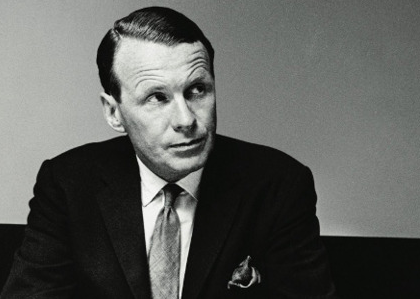
How is your new year's resolution to read more and write better holding up? After tracing the fascinating story of the most influential writing style guide of all time and absorbing advice on writing from some of modern history's most legendary writers, here comes some priceless and pricelessly uncompromising wisdom from a very different kind of cultural legend: iconic businessman and original "Mad Man" David Ogilvy. On September 7th, 1982, Ogilvy sent the following internal memo to all agency employees, titled "How to Write":


The better you write, the higher you go in Ogilvy & Mather. People who think well, write well.


Woolly minded people write woolly memos, woolly letters and woolly speeches.


Good writing is not a natural gift. You have to learn to write well. Here are 10 hints:


1. Read the Roman-Raphaelson book on writing. Read it three times.


2. Write the way you talk. Naturally.


3. Use short words, short sentences and short paragraphs.


4. Never use jargon words like reconceptualize, demassification, attitudinally, judgmentally. They are hallmarks of a pretentious ass.


5. Never write more than two pages on any subject.


6. Check your quotations.


7. Never send a letter or a memo on the day you write it. Read it aloud the next morning — and then edit it.


8. If it is something important, get a colleague to improve it.


9. Before you send your letter or your memo, make sure it is crystal clear what you want the recipient to do.


10. If you want ACTION, don't write. Go and tell the guy what you want.


David


This, and much more of Ogilvy's timeless advice, can be found in The Unpublished David Ogilvy: A Selection of His Writings from the Files of His Partners, a fine additi...