| ||||
|

Thoughts and feelings about life.
Sunday, January 15, 2012
Einstein, Anne Lammot & Steve Jobs on intuition vs. rationality, advice on falling in love from John Steinbeck, and more

 Hey Neal Beets! If you missed last week's edition – advice to sink in slowly, a list of don'ts for women on bikes circa 1895, 400 years of New York diaries, and more – you can catch up
 As far as New Year's resolutions go, hardly anything does one's mental, spiritual, and creative health more good than resolving to read more and write better. Today's reading list addresses these parallel aspirations. And since the number of books written about reading and writing likely far exceeds the reading capacity of a single human lifetime, this omnibus couldn't be – shouldn't be – an exhaustive list. It is, instead, a collection of timeless texts bound to radically improve your relationship with the written word, from whichever side of the equation you approach it.
 THE ELEMENTS OF STYLE

 BIRD BY BIRD

 We are a species that needs and wants to understand who we are. Sheep lice do not seem to share this longing, which is one reason why they write so little. But we do. We have so much we want to say and figure out."
 ON WRITING

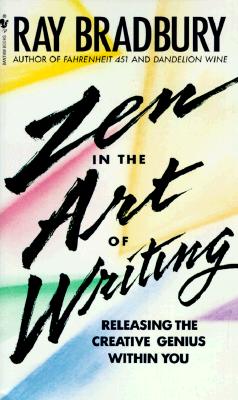
 ZEN IN THE ART OF WRITING
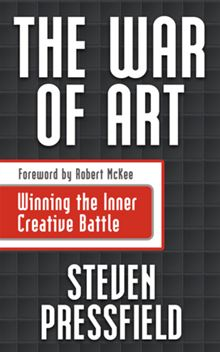
 THE WAR OF ART
 ADVICE TO WRITERS

 HOW TO WRITE A SENTENCE
 ERNEST HEMINGWAY ON WRITING

 HOW TO READ A BOOK






Thursday, January 5, 2012
"Dealing with Public Distruct," PM Magazine | icma.org
by Dana K. Lee

The public’s mistrust of government has been on the rise since the late 1960s when Watergate and other widely publicized issues began to tarnish the image of public officials. Late last summer, in a CBS and New York Timessurvey, only 19 percent of Americans felt that they could “trust government in Washington to do what is right most or all of the time.”
Thanks to the around-the-clock news cycle and numerous social media tools, people are ever more exposed to government wrongdoing and are more capable of teaming up with one another in order to attack and protest government officials. The Tea Party movement and the tax watchdog groups at the local level are indicative of the frustration and anger toward all levels of government. Stalling or even shutting down government is becoming a viable strategy for the disenfranchised, be they Tea Party activists or Occupy Wall Street protesters in Manhattan.
This article examines how elected and appointed officials will need to adapt to frustration and mistrust as well as personal attacks and the use of freedom-of-information legislation as weapons against government.
MISTRUST GROWS AND CONSUMES
One local resident decided that her local public officials were hiding something, including stealing and lying about it. She chose to bombard staff with e-mails demanding documents while also including pointed attacks on staff’s integrity in those e-mails. At one point it was estimated that her freedom-of-information requests would cost $15,000 to a local Maine town over the course of a year. Her methods discouraged and upset staff and crippled their productivity.
People who mistrust government and its employees will likely never be convinced to change their views. They see corruption and incompetence at all levels of government. They see it where it exists (via television reporting, 24 hours per day), where it doesn’t exist, and even where they believe it exists but just can’t prove it yet. Managers can be assumed guilty by simply being associated with government, and some people have already carried out imaginary trials and convictions.
The vast majority of public servants continue to be honest, conscientious, and hardworking people, yet uncivil discourse and mistrust are sharply on the rise. It is with this contentious environment in mind that I present strategies for coping with this type of resident.
Government employees need to recognize the thinking and belief systems of the true government haters. It hurts us, of course. We are only human, and it is in our nature as public servants to do our jobs to help society—not harm it, lie about it, steal from it, or get rich from it.
Other than espousing and living our code of ethics daily, and engaging citizens as much as possible, public servants can do precious little to reverse the growing mistrust of government. We are in unusual times given high property taxes, the rising number of foreclosures, and joblessness.
STRATEGIES MATTER
Elected and appointed public officials need to learn strategies for compartmentalizing, minimizing, eliminating, deflecting, or otherwise ignoring the negative attacks on their integrity, motives, and competence. There is no single strategy that will work in every case. Options are needed, depending on the nature, tone, and method of attack. Here are 10 options to consider.
1. You must depersonalize the attack. You are not the position. You are a human being, and you do a job the best you can. When you think of yourself as “the city” or “the county manager,” as if an equal sign exists between your name and that office, you truly risk being affected personally by the attacks. If it were not you, it would be some other person holding the office who would be under attack. It’s your ego that makes it personal, and it can tie you far too closely to the position.
2. Put critics in perspective in two ways:
First, always start by having your perspective in order. What are the big chunks of beautiful blue sky that make your life grand? The spouse, kids, grandchildren, time at camp, or playing sports with buddies? Also consider all the other great relationships, hobbies, and time spent smiling.
And then there are the majority of residents—80 percent? 90 percent?—who seem pleased or content with what you do. Taken together, that’s your big blue sky. Unfortunately, there are those few, tiny red holes of anger in that otherwise big beautiful sky. Does it make sense—does it work to your advantage—to focus on the tiny red holes?
Second, walk a mile in their shoes. Many of these people may have not had the upbringing, education, opportunities, and good fortune that you may have had. As noted earlier, the abused woman and the distressed widow had beliefs that, while hurtful and inappropriate, are nonetheless understandable. Isolate that thought and say to yourself, “I’m grateful that I am not them. They are very unhappy inside.”
3. Never feed the beast. Don’t focus on the person. Don’t allow the negative words and energy to poison the office. Don’t talk about him or her. Don’t even discuss the latest, nuttiest attack. Anger feeds anger, and negativity feeds negativity.
4. Don’t carry around a grudge at them. It’s not worth it. A friend told me that a grudge was “like you drinking poison and expecting them to die.” Let it go. They can carry the poison in their bellies.
5. Indifference is a nice strategy. “It takes 43 muscles to smile, 17 muscles to frown, and zero muscles to sit there with a dumb look on your face.” Some of my colleagues use this strategy extremely well. They have developed a strategy to view mistrust and attacks as a minor, natural occurrence, which will not be allowed to create negative feelings for them.
6. Wait it out. Don’t respond. Take time to cool down. What’s the worst that happens if you choose to simply not engage the attacker? Attackers want an immediate reaction. They want to get under your skin. Deny them that joy.
7. Learn lessons from their behavior. Act as though you are an outside observer of what they are trying to express or achieve. Maybe there is a lesson to be learned in their criticism, such as “I demand earlier posting of public meetings and agendas on the website!” It may be wise, transparent, and accountable to do that—so do it. You will not appease them in any meaningful way, but the other 80 percent—the silent majority—may appreciate it.
For the mistrustful, it would just be one item on a list of 100 top things they do not like about your office. They’ll be in the town office tomorrow or at the next council meeting with a new gripe.
8. Build a support network. Your colleagues are going through this as well. Find time to have lunch and share stories with them. Support each other. Reach out to a colleague getting attacked and offer an uplifting word.
9. Ask elected officials to issue policy or guidelines allowing staff to “shut down” these folks when they are getting aggressive, time-consuming, or too personal. Make sure that elected officials “have your back” if you need to take adult control over an increasingly intolerable situation. Determine your “rights” with your supervisors about how you may choose to speak and act when an angry citizen comes through the door to chide you. In any event, never get loud or aggressive. Remain calm, but firm.
10. Finally, be aware of a rational versus an instinctive reaction. In other words, will you offer a thoughtful response or jump to a fight-or-flight reaction? You must choose to stay at a rational level and stay above the fray. A friend once told me “to never get into a mudslinging contest unless you are ready to get covered in mud.” If they yell, you stay calm. They want to push your buttons; deny them that joy.
As a local government manager, you may not even be the staff member taking the most frequent and greatest abuse. Frontline staff will also need your support, your wisdom, and your strategies to mitigate the negative feelings that mistrustful people can cause.
A FEW BLACK EYES
These are difficult times to be a government employee, and it is important that an individual learns to cope with attacks on character and integrity. A person must remember that the attackers are relatively few in number and that, in general, residents of a community serve a reasonably content public. Remember too that, given the number of good, conscientious government employees, only a tiny fraction commit wrongdoing and cause a black eye for the rest.
It’s best to understand these attacks and maintain perspective. Also, it is best to depersonalize the attacks, and, to the maximum extent possible, leave the negativity behind. Stick by your ethics, smile, and do a good job.
Tuesday, January 3, 2012
How To Leverage the Effects of Confusion
Progress requires clarity. Confusion paralyzes. Great leaders create clarity; poor leaders confuse. Worse yet, confused people pull back.
Paralyzing confusion is bad but confusion has benefits.
Confusion precedes breakthrough. Pushing confusion away pushes progress away.
Confusion drives everyone to seek clarity.
Confusion opens us to outside influences and input. We seek help.
Thriving in confusion:
Acknowledge you don’t know when you don’t. The illusion of “steady as she goes” negates the benefit of confusion.
Don’t grab the first point of clarity. Average answers come easily – gently “reject” them. Say, “That idea sounds great what other options could we generate.” Extraordinary answers require sweat.
Stay calm. Slow your breathing, movements, and rate of speaking; Pause.
Write.
Demolish secrets. “Everyone should know everything they need to know to succeed,” Jon Wortmann.
Create safe environments. “Clarity is sought by people not forced on them,” Jon Wortmann.
Nurture candid discussions.
Change willingly, once clarity emerges. 70% clarity is enough.
How to act on clarity:
Clarity doesn’t guarantee progress; it needs courage for fuel.
Teams bolster courage.
Sometimes you feel clear when others don’t. If you can convince your honest, talented team, then go forward with a lion’s courage. The worst that could happen is you all might be wrong.
Other times the fog clears during team meetings. In both cases, allies and advocates instill courage.
Finally, finding courage in teams requires candor and honesty. If you’re surrounded with weak yes-men, peril is near.
Note: Jon Wortmann quotes are based on our December 14, 2011 conversation. Jon is co-author of the insightful book, “The Three Commitments of Leadership.”
**********
How do you find clarity?
How do you find courage to act on your clarity?
***********
Monday, January 2, 2012
Teddy Roosevelt
“The credit belongs to the man who is actually in the arena; whose face is marred by dust and sweat and blood; who strives valiantly; who errs and comes short again and again; who knows the great enthusiasms, the great devotions, and spends himself in a worthy cause”
The Joy of Quiet - NYTimes.com
ABOUT a year ago, I flew to Singapore to join the writer Malcolm Gladwell, the fashion designer Marc Ecko and the graphic designer Stefan Sagmeister in addressing a group of advertising people on “Marketing to the Child of Tomorrow.” Soon after I arrived, the chief executive of the agency that had invited us took me aside. What he was most interested in, he began — I braced myself for mention of some next-generation stealth campaign — was stillness.

Vivienne Flesher

Vivienne Flesher
A few months later, I read an interview with the perennially cutting-edge designer Philippe Starck. What allowed him to remain so consistently ahead of the curve? “I never read any magazines or watch TV,” he said, perhaps a little hyperbolically. “Nor do I go to cocktail parties, dinners or anything like that.” He lived outside conventional ideas, he implied, because “I live alone mostly, in the middle of nowhere.”
Around the same time, I noticed that those who part with $2,285 a night to stay in a cliff-top room at the Post Ranch Inn in Big Sur pay partly for the privilege of not having a TV in their rooms; the future of travel, I’m reliably told, lies in “black-hole resorts,” which charge high prices precisely because you can’t get online in their rooms.
Has it really come to this?
In barely one generation we’ve moved from exulting in the time-saving devices that have so expanded our lives to trying to get away from them — often in order to make more time. The more ways we have to connect, the more many of us seem desperate to unplug. Like teenagers, we appear to have gone from knowing nothing about the world to knowing too much all but overnight.
Internet rescue camps in South Korea and China try to save kids addicted to the screen.
Writer friends of mine pay good money to get the Freedom software that enables them to disable (for up to eight hours) the very Internet connections that seemed so emancipating not long ago. Even Intel (of all companies) experimented in 2007 with conferring four uninterrupted hours of quiet time every Tuesday morning on 300 engineers and managers. (The average office worker today, researchers have found, enjoys no more than three minutes at a time at his or her desk without interruption.) During this period the workers were not allowed to use the phone or send e-mail, but simply had the chance to clear their heads and to hear themselves think. A majority of Intel’s trial group recommended that the policy be extended to others.
THE average American spends at least eight and a half hours a day in front of a screen, Nicholas Carr notes in his eye-opening book “The Shallows,” in part because the number of hours American adults spent online doubled between 2005 and 2009 (and the number of hours spent in front of a TV screen, often simultaneously, is also steadily increasing).
The average American teenager sends or receives 75 text messages a day, though one girl in Sacramento managed to handle an average of 10,000 every 24 hours for a month. Since luxury, as any economist will tell you, is a function of scarcity, the children of tomorrow, I heard myself tell the marketers in Singapore, will crave nothing more than freedom, if only for a short while, from all the blinking machines, streaming videos and scrolling headlines that leave them feeling empty and too full all at once.
The urgency of slowing down — to find the time and space to think — is nothing new, of course, and wiser souls have always reminded us that the more attention we pay to the moment, the less time and energy we have to place it in some larger context. “Distraction is the only thing that consoles us for our miseries,” the French philosopher Blaise Pascal wrote in the 17th century, “and yet it is itself the greatest of our miseries.” He also famously remarked that all of man’s problems come from his inability to sit quietly in a room alone.
When telegraphs and trains brought in the idea that convenience was more important than content — and speedier means could make up for unimproved ends — Henry David Thoreau reminded us that “the man whose horse trots a mile in a minute does not carry the most important messages.” Even half a century ago, Marshall McLuhan, who came closer than most to seeing what was coming, warned, “When things come at you very fast, naturally you lose touch with yourself.” Thomas Merton struck a chord with millions, by not just noting that “Man was made for the highest activity, which is, in fact, his rest,” but by also acting on it, and stepping out of the rat race and into a Cistercian cloister.
(
Yet few of those voices can be heard these days, precisely because “breaking news” is coming through (perpetually) on CNN and Debbie is just posting images of her summer vacation and the phone is ringing. We barely have enough time to see how little time we have (most Web pages, researchers find, are visited for 10 seconds or less). And the more that floods in on us (the Kardashians, Obamacare, “Dancing with the Stars”), the less of ourselves we have to give to every snippet. All we notice is that the distinctions that used to guide and steady us — between Sunday and Monday, public and private, here and there — are gone.
We have more and more ways to communicate, as Thoreau noted, but less and less to say. Partly because we’re so busy communicating. And — as he might also have said — we’re rushing to meet so many deadlines that we hardly register that what we need most are lifelines.
So what to do? The central paradox of the machines that have made our lives so much brighter, quicker, longer and healthier is that they cannot teach us how to make the best use of them; the information revolution came without an instruction manual. All the data in the world cannot teach us how to sift through data; images don’t show us how to process images. The only way to do justice to our onscreen lives is by summoning exactly the emotional and moral clarity that can’t be found on any screen.
MAYBE that’s why more and more people I know, even if they have no religious commitment, seem to be turning to yoga, or meditation, or tai chi; these aren’t New Age fads so much as ways to connect with what could be called the wisdom of old age. Two journalist friends of mine observe an “Internet sabbath” every week, turning off their online connections from Friday night to Monday morning, so as to try to revive those ancient customs known as family meals and conversation. Finding myself at breakfast with a group of lawyers in Oxford four months ago, I noticed that all their talk was of sailing — or riding or bridge: anything that would allow them to get out of radio contact for a few hours.
Other friends try to go on long walks every Sunday, or to “forget” their cellphones at home. A series of tests in recent years has shown, Mr. Carr points out, that after spending time in quiet rural settings, subjects “exhibit greater attentiveness, stronger memory and generally improved cognition. Their brains become both calmer and sharper.” More than that, empathy, as well as deep thought, depends (as neuroscientists like Antonio Damasio have found) on neural processes that are “inherently slow.” The very ones our high-speed lives have little time for.
In my own case, I turn to eccentric and often extreme measures to try to keep my sanity and ensure that I have time to do nothing at all (which is the only time when I can see what I should be doing the rest of the time). I’ve yet to use a cellphone and I’ve never Tweeted or entered Facebook. I try not to go online till my day’s writing is finished, and I moved from Manhattan to rural Japan in part so I could more easily survive for long stretches entirely on foot, and every trip to the movies would be an event.
None of this is a matter of principle or asceticism; it’s just pure selfishness. Nothing makes me feel better — calmer, clearer and happier — than being in one place, absorbed in a book, a conversation, a piece of music. It’s actually something deeper than mere happiness: it’s joy, which the monk David Steindl-Rast describes as “that kind of happiness that doesn’t depend on what happens.”
It’s vital, of course, to stay in touch with the world, and to know what’s going on; I took pains this past year to make separate trips to Jerusalem and Hyderabad and Oman and St. Petersburg, to rural Arkansas and Thailand and the stricken nuclear plant in Fukushima and Dubai. But it’s only by having some distance from the world that you can see it whole, and understand what you should be doing with it.
For more than 20 years, therefore, I’ve been going several times a year — often for no longer than three days — to a Benedictine hermitage, 40 minutes down the road, as it happens, from the Post Ranch Inn. I don’t attend services when I’m there, and I’ve never meditated, there or anywhere; I just take walks and read and lose myself in the stillness, recalling that it’s only by stepping briefly away from my wife and bosses and friends that I’ll have anything useful to bring to them. The last time I was in the hermitage, three months ago, I happened to pass, on the monastery road, a youngish-looking man with a 3-year-old around his shoulders.
“You’re Pico, aren’t you?” the man said, and introduced himself as Larry; we’d met, I gathered, 19 years before, when he’d been living in the cloister as an assistant to one of the monks.
“What are you doing now?” I asked.
“I work for MTV. Down in L.A.”
We smiled. No words were necessary.
“I try to bring my kids here as often as I can,” he went on, as he looked out at the great blue expanse of the Pacific on one side of us, the high, brown hills of the Central Coast on the other. “My oldest son” — he pointed at a 7-year-old running along the deserted, radiant mountain road in front of his mother — “this is his third time.”
The child of tomorrow, I realized, may actually be ahead of us, in terms of sensing not what’s new, but what’s essential.
Sunday, January 1, 2012
Nobody Understands Debt, by Paul Krugman NYT
This misplaced focus said a lot about our political culture, in particular about how disconnected Congress is from the suffering of ordinary Americans. But it also revealed something else: when people in D.C. talk about deficits and debt, by and large they have no idea what they’re talking about — and the people who talk the most understand the least.
Perhaps most obviously, the economic “experts” on whom much of Congress relies have been repeatedly, utterly wrong about the short-run effects of budget deficits. People who get their economic analysis from the likes of the Heritage Foundation have been waiting ever since President Obama took office for budget deficits to send interest rates soaring. Any day now!
And while they’ve been waiting, those rates have dropped to historical lows. You might think that this would make politicians question their choice of experts — that is, you might think that if you didn’t know anything about our postmodern, fact-free politics.
But Washington isn’t just confused about the short run; it’s also confused about the long run. For while debt can be a problem, the way our politicians and pundits think about debt is all wrong, and exaggerates the problem’s size.
Deficit-worriers portray a future in which we’re impoverished by the need to pay back money we’ve been borrowing. They see America as being like a family that took out too large a mortgage, and will have a hard time making the monthly payments.
This is, however, a really bad analogy in at least two ways.
First, families have to pay back their debt. Governments don’t — all they need to do is ensure that debt grows more slowly than their tax base. The debt from World War II was never repaid; it just became increasingly irrelevant as the U.S. economy grew, and with it the income subject to taxation.
Second — and this is the point almost nobody seems to get — an over-borrowed family owes money to someone else; U.S. debt is, to a large extent, money we owe to ourselves.
This was clearly true of the debt incurred to win World War II. Taxpayers were on the hook for a debt that was significantly bigger, as a percentage of G.D.P., than debt today; but that debt was also owned by taxpayers, such as all the people who bought savings bonds. So the debt didn’t make postwar America poorer. In particular, the debt didn’t prevent the postwar generation from experiencing the biggest rise in incomes and living standards in our nation’s history.
But isn’t this time different? Not as much as you think.
It’s true that foreigners now hold large claims on the United States, including a fair amount of government debt. But every dollar’s worth of foreign claims on America is matched by 89 cents’ worth of U.S. claims on foreigners. And because foreigners tend to put their U.S. investments into safe, low-yield assets, America actually earns more from its assets abroad than it pays to foreign investors. If your image is of a nation that’s already deep in hock to the Chinese, you’ve been misinformed. Nor are we heading rapidly in that direction.
Now, the fact that federal debt isn’t at all like a mortgage on America’s future doesn’t mean that the debt is harmless. Taxes must be levied to pay the interest, and you don’t have to be a right-wing ideologue to concede that taxes impose some cost on the economy, if nothing else by causing a diversion of resources away from productive activities into tax avoidance and evasion. But these costs are a lot less dramatic than the analogy with an overindebted family might suggest.
And that’s why nations with stable, responsible governments — that is, governments that are willing to impose modestly higher taxes when the situation warrants it — have historically been able to live with much higher levels of debt than today’s conventional wisdom would lead you to believe. Britain, in particular, has had debt exceeding 100 percent of G.D.P. for 81 of the last 170 years. When Keynes was writing about the need to spend your way out of a depression, Britain was deeper in debt than any advanced nation today, with the exception of Japan.
Of course, America, with its rabidly antitax conservative movement, may not have a government that is responsible in this sense. But in that case the fault lies not in our debt, but in ourselves.
So yes, debt matters. But right now, other things matter more. We need more, not less, government spending to get us out of our unemployment trap. And the wrongheaded, ill-informed obsession with debt is standing in the way.